
Buteo jamaicensisEl príncipe de los cielos
Una mirada a la vida del aguililla cola roja y una crónica de campo sobre el instante en que un ave descubre sus alas.
◷ 10 min de lectura aprox.
Comenzar lectura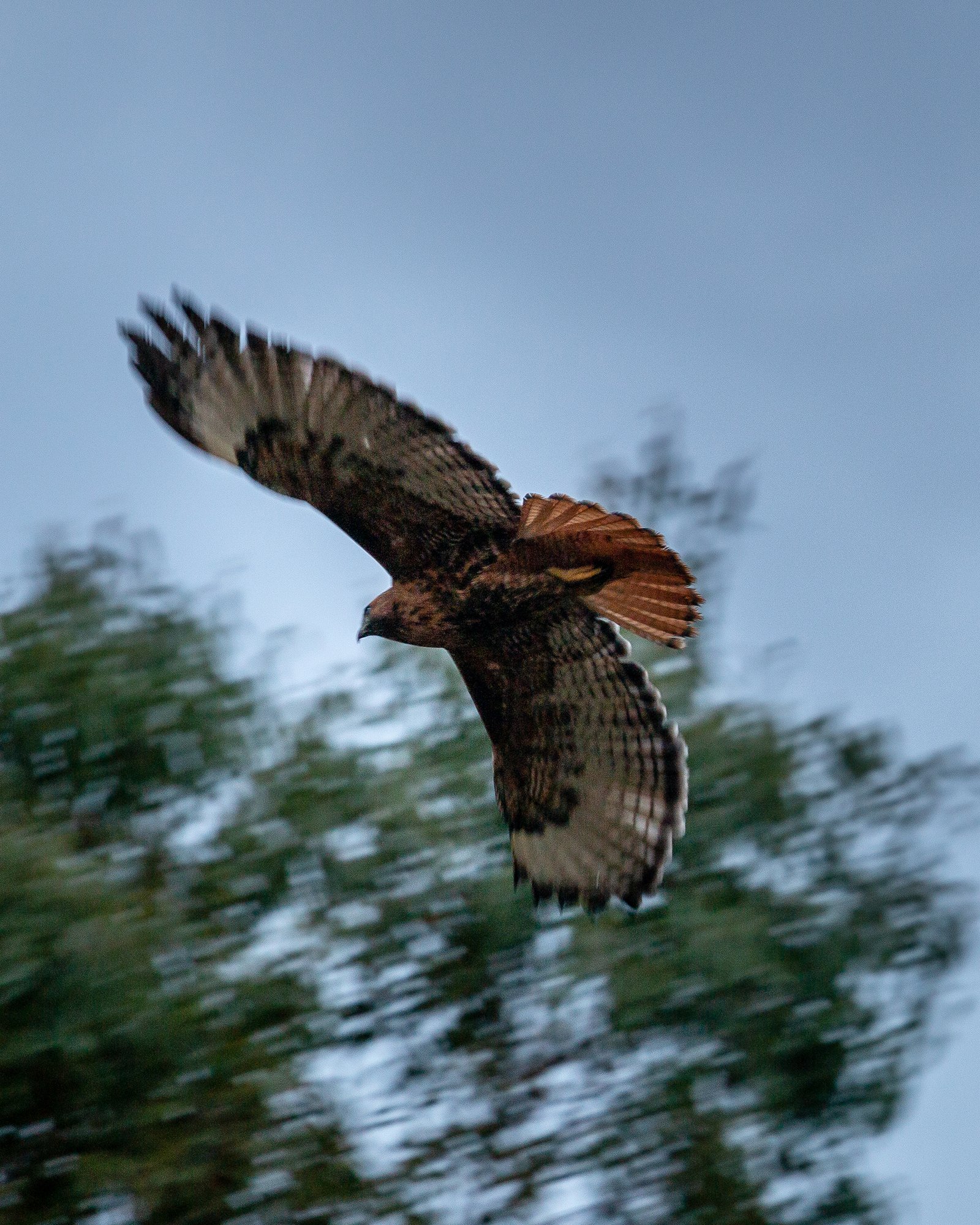
Buteo jamaicensis
Aguililla cola roja · Orden Accipitriformes
- Nombre científico
- Buteo jamaicensis (Gmelin, 1788)
- Nombre común
- Aguililla o halcón cola roja
- Longevidad indicada
- 21 años; registro máximo: 28 años y 10 meses
- Longitud aproximada
- 45 cm machos; 65 cm hembras
- Envergadura
- 110–145 cm
- Alimentación
- Carnívoro oportunista
- Peso indicado
- 690 g–1.6 kg (interpretación de la unidad del manuscrito)
- Distribución
- América del Norte, Central y parte de Sudamérica
Datos transcritos del artículo original; algunas cifras y referencias requieren comprobación científica antes de su publicación definitiva. Fuente citada por la autora: Northwest Wildlife Preservation Society.
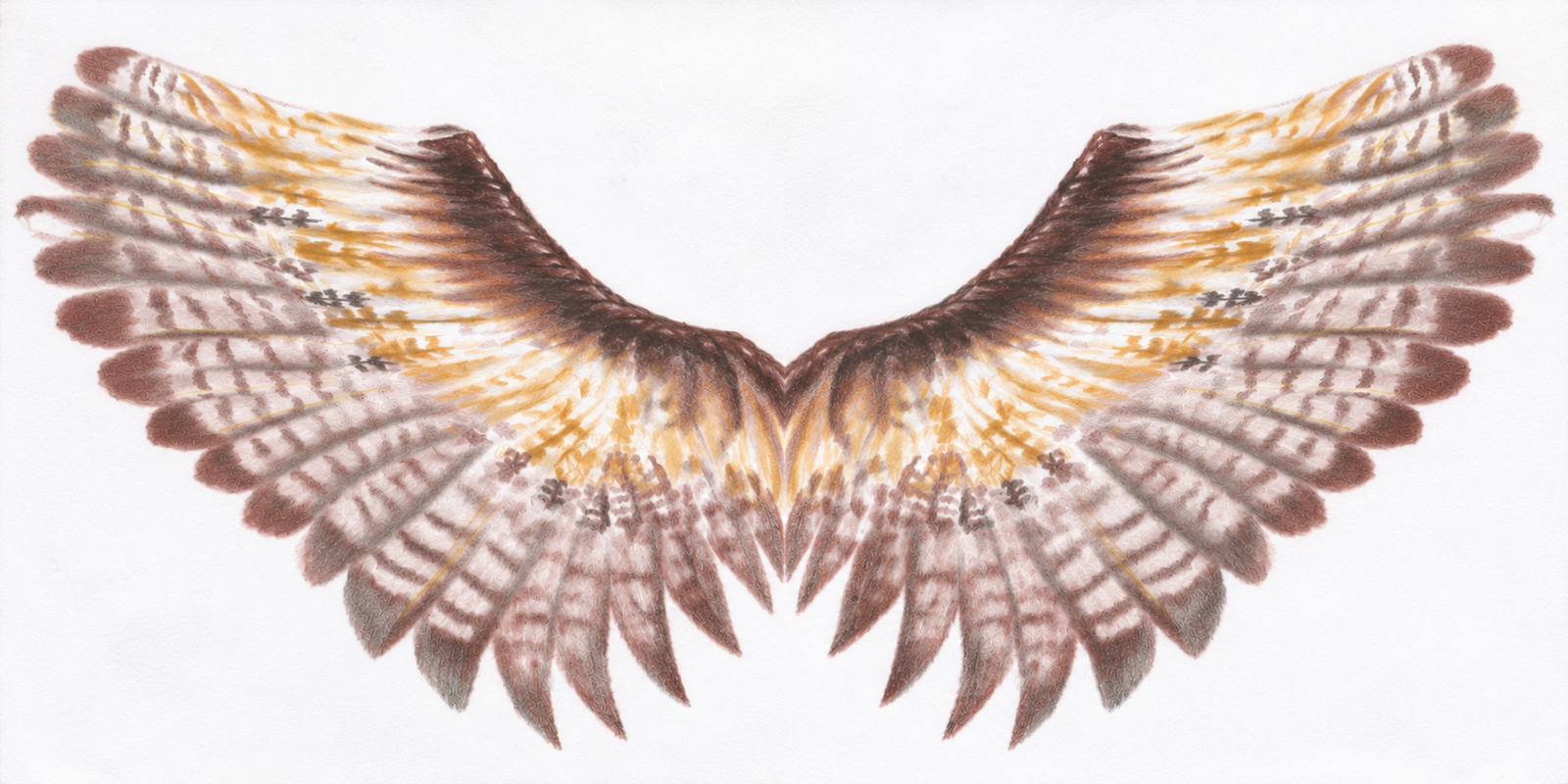
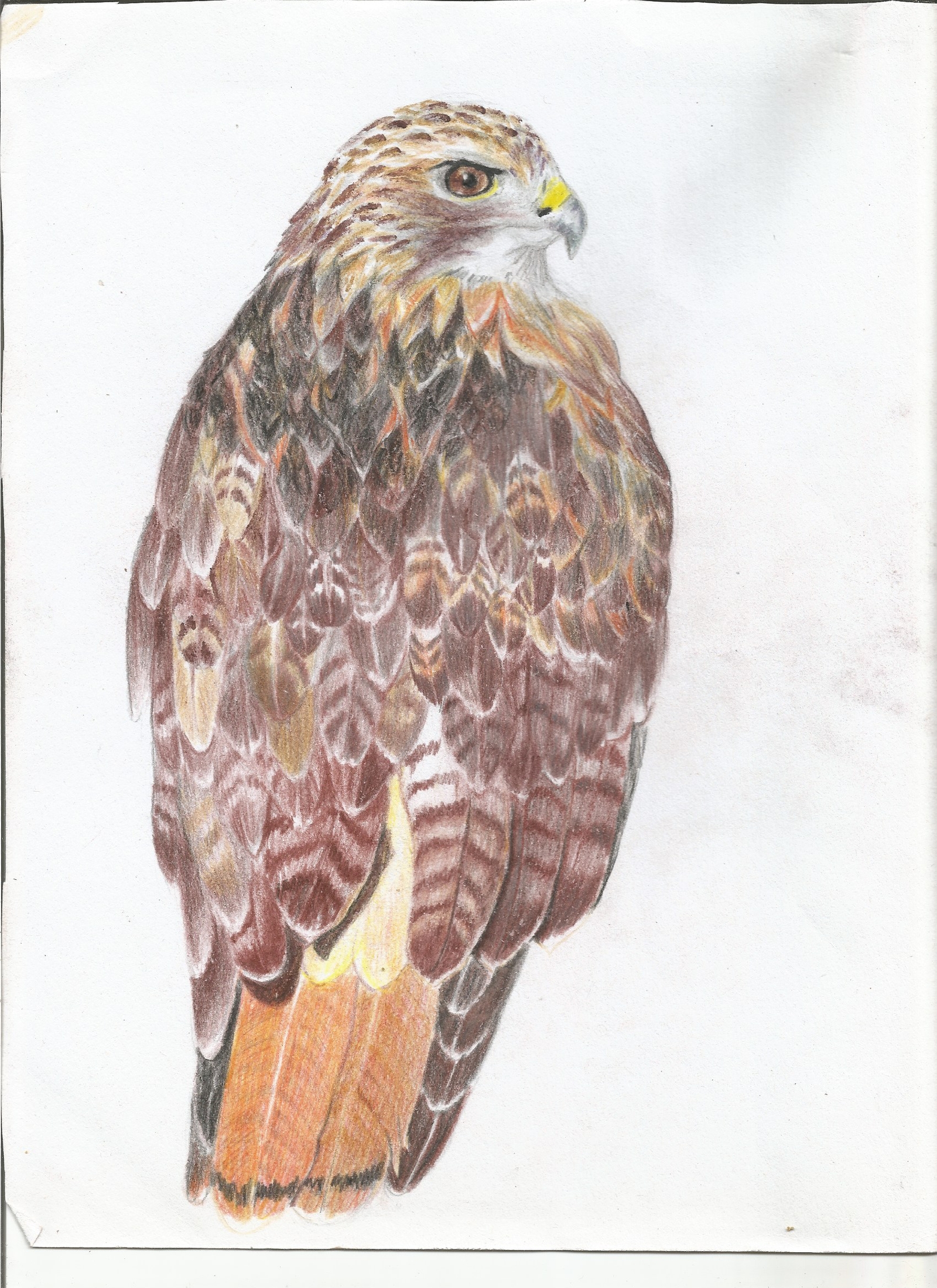
Por los cielos de Tapalpa vuela un esplendoroso ser, que con su canto llena de asombro a todas las criaturas del bosque, para poder divisar su hermosura.
Solo es necesario voltear hacia arriba y a lo muy lejos, si tienes suerte y mucha paciencia, podrás mirar una distintiva característica real: una cola roja como el ámbar que se pasea con elegancia y vigilia; es la aguililla cola roja, uno de los seres más maravillosos de esta tierra, que como hogar tiene a los bosques de pino-encino identitarios de la meseta de Tapalpa.
Todos los días vuela en busca de alimento para cumplir una de las funciones más importantes del ecosistema: Estar arriba de la cadena trófica y regular las poblaciones de herbívoros, que sin esta importante función, acabarían con cualquier brote de planta que quisiera crecer…
En su plato se encuentran reptiles, mamíferos, y aves más pequeñas (Grossman y Hamlet 1988).
Sus potentes ojos pueden entrever cualquier movimiento entre hierbas, a más de 2km de distancia,
cuando tiene a la presa en su rango perfecto, llega el momento de cerrar sus alas para caer en picada a una velocidad de 190 kilómetros por hora, es ahí cuando un par de poderosas garras reclaman lo que es suyo cazando a su presa.
Y cuando el amor o la biología llaman, la hembra y el macho se encuentran por los cielos para hacer una danza de apareamiento, donde el macho tras hacer vuelos que desafían la gravedad, se deja caer contundentemente y luego vuelve a la vista femenina, si el la impresiona, es finalmente elegido por ella y juntos se toman de las garras para dar vueltas por el acantilado descendiendo en picada… y justo antes de oler la tierra y poder despedazarse en el suelo, reabren sus alas para frenar de golpe el abismo y llegar a los cielos nuevamente… así la pareja elegida se queda junta para toda la vida.
Ambos construyen su nido, con ramas y hojas, en los lugares más altos que encuentren, ya sea la copa de un árbol o una cima, La hembra pone un promedio de 1 a 2 huevos. Después de la eclosión, las crías son alimentadas durante 16 a 23 días por la hembra, mientras que el macho defiende el territorio (CONAMP 2014)
“¡Confía y abre las alas! Hay todo un mundo afuera para ti.— Ekaterina Libertad Valdovinos González
El primer vuelo: una experiencia en Sierra Mazati
Relato en primera persona de la autora.
Por las frescas montañas del joven bosque de Sierra Mazati, ubicado entre Tapalpa y Chiquilisltan, recién restaurado hace apenas 30 años , tuve la oportunidad de visitar las Piedras Encantadas , y apenas llegue supe porque se llamaban así.
Instale mi campamento para estar por varios días, y al primero una lluvia se dejó caer, las nubes grises lo envolvieron todo, no podía ver ni un metro en el horizonte, aquel bosque que había visto hace 20 minutos había desaparecido, la neblina espesa me hizo sentir soledad e incertidumbre. Fue justo en ese instante que escuche ese canto que jamás olvidare, el canto típico de águila en las películas,
me emocioné, mi sangre de bióloga se hirvió
Pero no era un canto cualquiera, pude notar tras varios lamentos de seguidas sesiones que se trataba de un pichón , y en ese momento lo entendí todo, estaba ante mis ojos la escena más decisiva para un cola roja, escena que solo había podido citar en la literatura
El pichón había sido “abandonado” voluntariamente por sus padres, era el momento crítico justo cuando cumplía un mes, que es tomada la decisión de que aquellas plumas color canela que ya estaban bien crecidas estaban listas para conocer el viento de los cielos
Y no hay fuerza mayor en la naturaleza animal para hacer moverse y buscar más allá que el hambre…
El pichón confundido por el desamparo, comienza a buscar entre su incomodidad, alguna salida de aquel sentir y es ahí cuando se pregunta si aquel acantilado frente a él es la respuesta, después de todo, es ahí donde vio a sus padres por última vez…
Pero claro, yo sabía que en realidad no estaba solo, ya que los padres suelen cuidarlo desde lejos. Fue ahí cuando imploré al bosque para pedir el acaso de tener la bendición de poder presenciar el momento más decisivo en la vida de un cola roja… su primer vuelo.
La lluvia seso y como si todo hubiese sido un sueño la nube se fue para mostrarme aquella esplendorosa vista, yo quería sentir lo que era estar en aquellas cavidades de las Piedras Encantadas, Así que la escalé lo más alto que pude, ahí el sonido del pichón era más fuerte, era obvio que el nido estaba en la cima de aquella roca.
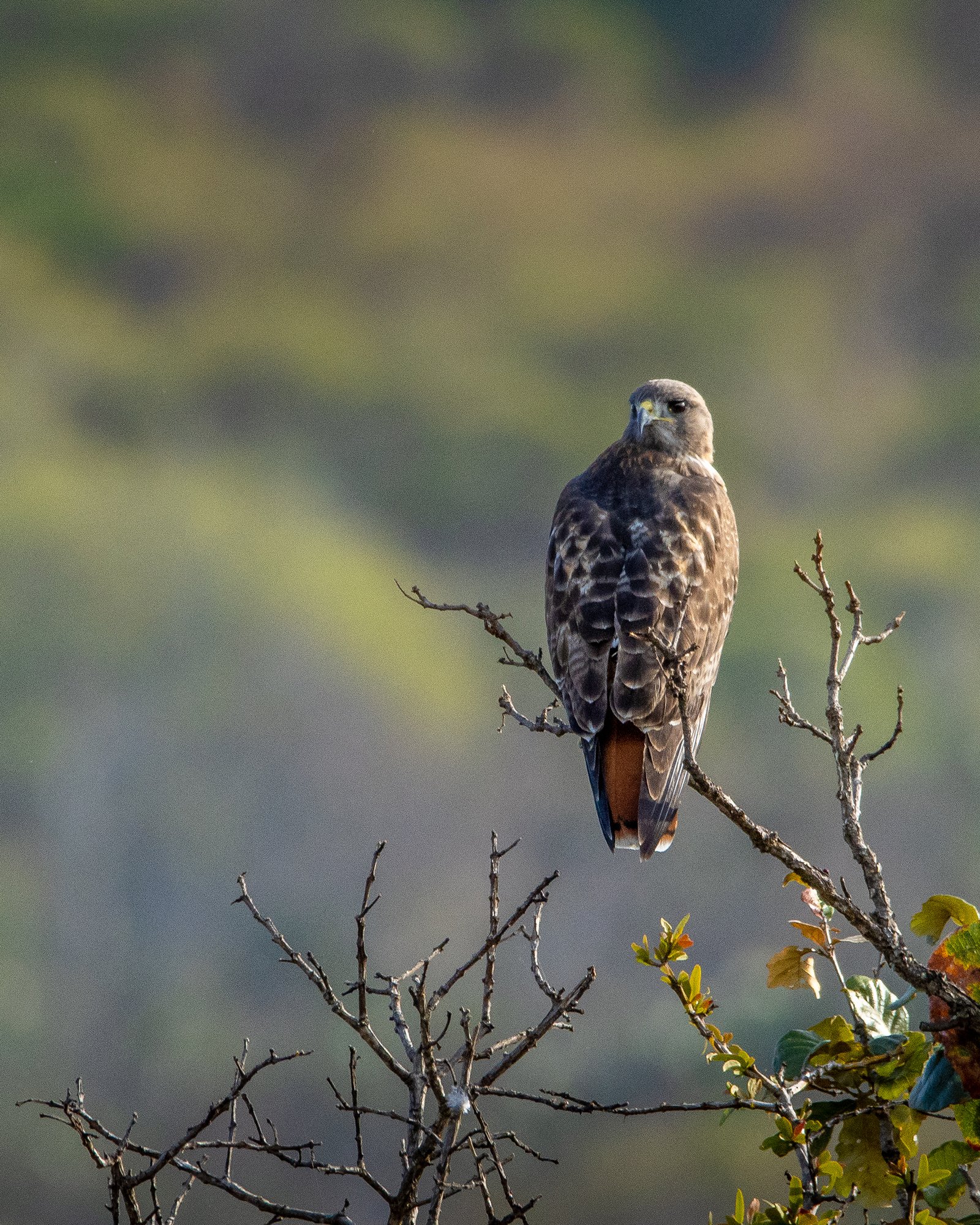
Entré en meditación desde mi sitio…respire hondo varias veces… y en un instante el sonido dejo de escucharse…solo el viento acariciaba el silencio… el bosque entero descanso de aquel lamento, eso me hizo abrir los ojos de golpe y fue en ese momento que frente a mis ojos apareció mi anhelo …
El pichón había podido por fin, quien sabe después de cuantos días, dejar su lamento atrás y lanzarse al gran abismo de más de 200 metros de altura…
Imagino ese momento, en el que el joven cola roja conectó aquella inquietud física de entender que sus alas poseían aquella maravillosa función, inimaginable aun para el pichón, tan incognito como el mundo que le esperaba, ahora todo lo que pudiera alcanzar su vista era para su gozo y disfrute, era para él.
Miedo, instinto y confianza, cumplieron el equilibrio perfecto para cumplir el “momentum” para el cual nació, el momento de dejar aquella cueva que creía era todo lo que existía en el mundo, desplegando sus alas, mirando el Sol frente a frente y sobre todo, sintiendo el viento en cada pluma, para finalmente sentir en su esplendor el vuelo de la libertad.
El vuelo duro pocos minutos, dio dos vueltas solo para regresar y posarse a unos metros de su nido, ¡me imagino el gran asombro para el! …
- ¿Que acaba de ocurrir?!- Se ha de haber preguntado
Después paso a llorar todo lo que resto del día, pero justo en el atardecer escuche a su madre, cantarle para darle ánimos. Eso me conmovió aún más…Así despedí el día, con aquellos lamentos que invadían todo el bosque, horas después el cansancio me gano.
Desperté con el frio del amanecer, y mi maravilloso y joven vecino seguía cantando, emocionada de seguir el progreso me levanté, y con mi monocular en mano, caminé lo más cerca que pude al acantilado; Traté de seguir el rastro auditivo pero el joven cola roja ya no se veía en los alrededores del nido … mmm que extraño…
Y justo cuando me había fatigado de buscar, mi monocular enfocó y con sorpresa y hasta un tanto de espanto, descubrí que el recién volantón estaba a unos 2 metros de mí.
Me quede helada, no quería hacer movimiento alguno que lo fuera a espantar, quería admirarlo así de cerca el tiempo que más pudiera.
Ver un joven cola roja en estado salvaje, en sus primeros momentos de vuelo… definitivamente no te pasa todos los días
Y ahí estaba yo frente a frente a ese ser esplendoroso, que sabía que le miraba, le agradecí a lo lejos, incluso hasta llegar a sentir que el mismo fue a donde yo porque sintió mi vigilia hacia él, quien sabe….
¿Porqué de todos los lados donde se pudo posar decidió frente a mi campamento?…
Y en ese momento a lo lejos se escucharon los cantos de sus padres, y alzo sus recién estrenadas alas, para en un abrir y cerrar de ojos estar en el viento, planeando en aquel acantilado que un día antes le aterraba.
Ahí iba la joven cola roja, por los cielos, mostrándome una lección de valentía, libertad e independencia, que se quedara en mí siempre que sienta miedo a seguir el siguiente paso
Incitándome con su llamado a lanzarme al gran abismo.
Cuaderno de campo audiovisual
Cuatro registros originales documentados por la autora. Activa el sonido para escuchar el ambiente registrado.
Compartir el cielo
Esta especie enfrenta distintas amenazas, de las cuales la más importantes son el envenenamiento por productos agroquímicos (rodenticidas, insecticidas, etc.), o
Por actividades contaminantes, como la minería (Stone et al. 1999) el desmonte extensivo y los incendios forestales.
Sin embargo, es una especie con amplios límites de tolerancia a la perturbación y en el norte del país es común en zonas agrícolas, e incluso urbanas y suburbanas.
Probablemente la limitante mayor para esta especie en zonas perturbadas es la presencia de árboles altos para perchar y para la construcción de sus nidos (Preston y Beane 1993). Esta especie es comúnmente cazada o atrapada para ser vendida a Personas que practican la cetrería, asimismo, al encontrarse incluso en hábitats suburbanos se enfrenta a la electrocución al perchar en cables de corriente eléctrica y al Choque con vehículos (Preston y Beane 1993).
Quiero terminar invitándoles a revisar el material videográfico que tuve la oportunidad de documentar, en donde pueden escuchar y ver por ustedes mismos, lo que viví y aquí escribo con detalle. Accediendo al código QR o por medio de este enlace.
Ver la dirección original del artículo
Si desean vivir otra de mis aventuras les invito a conocer mi canal de YouTube y mis redes sociales
Así como el Buteo jamaicensis enfrentemos el miedo y avancemos hacia un nuevo mundo, donde haya respeto y espacio para las demás especies en este planeta.
Literatura citada
Datos bibliográficos.
- Northwest Wildlife Preservation Society — referencia incompleta en el manuscrito.
- Grossman y Hamlet (1988) — referencia incompleta.
- CONAMP (2014) — sigla y referencia pendientes de verificar; posible CONANP.
- Stone et al. (1999) — referencia incompleta.
- Preston y Beane (1993) — referencia incompleta.
- CONANP — Ficha de especie: Buteo jamaicensis (PDF)
Texto y observación de campoEkaterina Libertad Valdovinos González
FotografíasSaulo Cortés
VideosEkaterina Libertad Valdovinos González
PublicaciónEl Tecolote de la Sierra
Apoya el trabajo de la bióloga Ekaterina
Conoce sus proyectos de investigación, divulgación y conservación de la naturaleza a través de Pies de Libertad.
Conocer Pies de LibertadButeo jamaicensisThe prince of the skies
A look at the life of the red-tailed hawk and a field chronicle about the moment a bird discovers its wings.
◷ Approx. 9 min read
Begin readingButeo jamaicensis
Red-tailed hawk · Order Accipitriformes
- Scientific name
- Buteo jamaicensis (Gmelin, 1788)
- Common name
- Red-tailed hawk
- Reported longevity
- 21 years; maximum reported: 28 years, 10 months
- Approximate length
- 45 cm males; 65 cm females
- Wingspan
- 110–145 cm
- Diet
- Opportunistic carnivore
- Reported weight
- 690 g–1.6 kg (unit interpreted from manuscript)
- Range
- North and Central America and parts of South America
Data transcribed from the original article; some figures and references require scientific verification before final publication. Source cited by the author: Northwest Wildlife Preservation Society.
Across the skies of Tapalpa flies a splendid being whose call fills every creature of the forest with wonder, inviting them to glimpse its beauty.
All you need to do is look up, far into the distance. If you are lucky and very patient, you may glimpse a distinctive, regal feature: an amber-red tail moving with elegance and vigilance. It is the red-tailed hawk, one of the most wonderful beings of this land, at home in the pine-oak forests that define the Tapalpa plateau.
Every day it flies in search of food, fulfilling one of the ecosystem’s most important roles: occupying the upper levels of the food chain and regulating herbivore populations, which without this function could consume every new plant shoot trying to grow…
Its diet includes reptiles, mammals and smaller birds (Grossman and Hamlet, 1988).
Its powerful eyes can detect movement among grasses from more than 2 km away.
When its prey is within perfect range, it folds its wings and dives at a speed of 190 kilometers per hour. Then a pair of powerful talons seize the prey.
And when love—or biology—calls, female and male meet in the sky for a courtship dance. After flights that defy gravity, the male plunges downward and then returns to the female’s view. If he impresses her, she chooses him. Together they clasp talons and spiral down beside the cliff… and just before reaching the ground, they spread their wings again, braking their descent and returning to the sky. Thus, the chosen pair remains together for life.
Together they build a nest of branches and leaves in the highest places they can find, whether the crown of a tree or a summit. The female lays an average of one or two eggs. After hatching, the female feeds the chicks for 16 to 23 days while the male defends the territory (CONAMP, 2014, as cited in the original manuscript).
“Trust yourself and spread your wings! There is a whole world outside waiting for you.— Ekaterina Libertad Valdovinos González
The first flight: an encounter in Sierra Mazati
A first-person account by the author.
In the cool mountains of the young Sierra Mazati forest, between Tapalpa and Chiquilistlán, restored only about thirty years ago, I had the chance to visit Piedras Encantadas. As soon as I arrived, I understood why they bore that name.
I set up camp to stay for several days. On the first day, rain began to fall and gray clouds wrapped around everything. I could not see even a meter into the distance. The forest I had seen twenty minutes earlier had vanished. The thick fog made me feel lonely and uncertain. Just then, I heard a call I will never forget: the typical eagle cry heard in movies.
I was thrilled; the biologist in me came alive.
But this was no ordinary call. After hearing repeated cries, I could tell it came from a chick. Then I understood everything: before my eyes was one of the most decisive scenes in the life of a red-tailed hawk, a scene I had previously known only from the literature.
The chick had been “abandoned” voluntarily by its parents. It was the critical moment, around one month of age, when those well-grown cinnamon-colored feathers were ready to meet the wind of the skies.
And in the animal world, no force drives a creature to move and search beyond more strongly than hunger…
Confused by its apparent abandonment, the chick searched for a way out of its discomfort. It began to wonder whether the cliff before it held the answer. After all, that was where it had last seen its parents…
Of course, I knew it was not truly alone, because its parents usually watch from a distance. I pleaded with the forest for the blessing of witnessing the most decisive moment in the life of a red-tailed hawk: its first flight.
The rain stopped and, as if it had all been a dream, the cloud drifted away to reveal that splendid view. I wanted to feel what it was like to be inside the hollows of Piedras Encantadas, so I climbed as high as I could. The chick’s call was louder there; the nest was clearly at the top of the rock.
I began to meditate where I sat… I took several deep breaths… and suddenly the calling stopped. Only the wind caressed the silence. The entire forest rested from that lament. I opened my eyes at once, and there, before me, appeared what I had longed to see…
At last, after who knows how many days, the chick had left its lament behind and launched itself into the great abyss, more than 200 meters high…
I imagine that moment when the young red-tail connected its physical restlessness with the realization that its wings held such a marvelous function, still unimaginable to the chick, as unknown as the world awaiting it. Everything its eyes could now reach was there for its joy and delight.
Fear, instinct and trust came into perfect balance to create the moment for which it had been born: leaving the cave it believed was the whole world, spreading its wings, facing the sun and, above all, feeling the wind in every feather—finally experiencing the full splendor of the flight of freedom.
The flight lasted only a few minutes. It circled twice before returning to perch a few meters from its nest. I can only imagine its amazement!…
“What just happened?!” it must have wondered.
Then it cried for the rest of the day. At sunset I heard its mother calling, as though encouraging it. That moved me even more. I said goodbye to the day with those cries filling the forest, and hours later exhaustion overcame me.
I woke in the cold of dawn, and my wonderful young neighbor was still calling. Eager to follow its progress, I got up and, monocular in hand, walked as close to the cliff as I could. I tried to follow the sound, but the young red-tail was nowhere near the nest… How strange…
Just when I was tired of searching, my monocular came into focus and, with surprise and even a little alarm, I discovered that the newly fledged bird was about two meters away from me.
I froze. I did not want to make any movement that might frighten it; I wanted to admire it from so close for as long as possible.
Seeing a young wild red-tailed hawk in its first moments of flight… that certainly does not happen every day.
And there I was, face to face with that splendid being, which knew I was watching. I thanked it from a distance. I even came to feel that it had come to me because it sensed my watchfulness. Who knows…
Why, of all the places where it could have perched, had it chosen the spot in front of my camp?…
At that moment, I heard its parents calling in the distance. It raised its newly tested wings and, in the blink of an eye, was back in the wind, gliding above the cliff that had terrified it the day before.
There went the young red-tail through the skies, showing me a lesson in courage, freedom and independence that will remain with me whenever I fear taking the next step.
Its call urging me to leap into the great abyss.
Audiovisual field journal
Four original records documented by the author. Turn on sound to hear the recorded environment.
Sharing the sky
This species faces various threats, among the most important being poisoning by agricultural chemicals (rodenticides, insecticides and others),
and polluting activities such as mining (Stone et al., 1999), extensive land clearing and forest fires.
Nevertheless, it is a species with a broad tolerance for disturbance; in northern Mexico it is common in agricultural areas and even in urban and suburban environments.
Probably the greatest limitation for this species in disturbed areas is the availability of tall trees for perching and nesting (Preston and Beane, 1993).
This species is also hunted or captured for sale to
people who practice falconry. Moreover, because it also inhabits suburban areas, it faces electrocution when perching on power lines and
collisions with vehicles (Preston and Beane, 1993).
I would like to close by inviting you to explore the video footage I had the opportunity to document. There, you can hear and see for yourselves what I experienced and have described here in detail, using the QR code or this link.
Visit the original article URL
If you would like to join me on another adventure, I invite you to visit my YouTube channel and social media.
Like Buteo jamaicensis, let us face fear and move toward a new world where other species on this planet have respect and room to live.
References cited
References named in the manuscript are retained below. Incomplete bibliographic details await editorial verification.
- Northwest Wildlife Preservation Society — incomplete reference in manuscript.
- Grossman y Hamlet (1988) — incomplete reference.
- CONAMP (2014) — acronym and reference to verify; possibly CONANP.
- Stone et al. (1999) — incomplete reference.
- Preston y Beane (1993) — incomplete reference.
- CONANP — Species fact sheet: Buteo jamaicensis (PDF)
Text and field observationEkaterina Libertad Valdovinos González
PhotographsSaulo Cortés
VideosEkaterina Libertad Valdovinos González
PublicationEl Tecolote de la Sierra
Support biologist Ekaterina’s work
Discover her research, outreach and nature conservation projects through Pies de Libertad.
Explore Pies de Libertad


